The Painting I Can't Show You
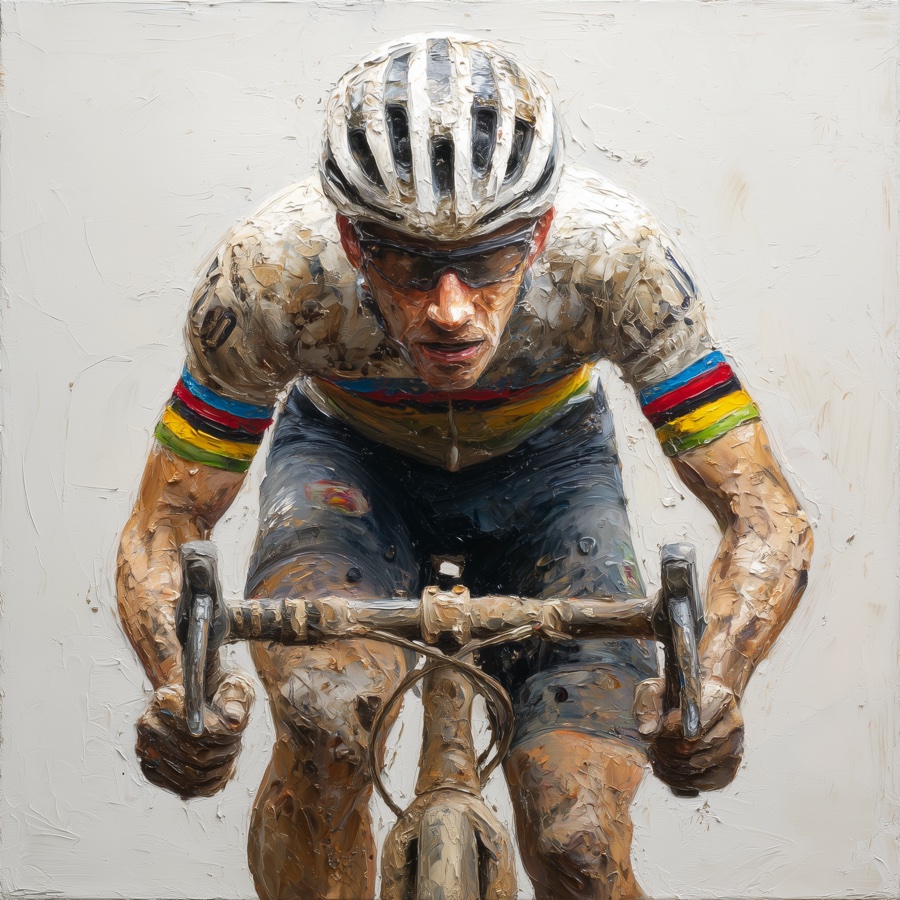
Earlier this week I made one of the best images I've ever produced. A rider head-on, mud everywhere, the world champion's bands, all of it on a pale gold background that looked like it had been troweled on with a bricklayer's float. I was ready to send it to the studio to be painted. You will never see it.
The problem was simple: I'd started from a race photograph that wasn't mine. Restyling a photo — even burying it under centimetres of digital paint — doesn't make it yours. The composition, the moment, the light: that's the photographer's work, and it survives any amount of impasto. Add a recognisable world champion and his sponsors' logos, and one image manages to collect three separate rights problems in a single frame.
It would have been easy to shrug. Who'd know? But this shop sells physical paintings of these images, and 'who'd know' is no foundation to build anything on. So the image went in a drawer, and the drawer stays shut.
Here's the interesting part, though. The idea was never the problem — ideas belong to nobody. A mud-covered champion, head-on, on a field of pale gold: I could chase that honestly. So I went back to a blank prompt and built it again from words alone. No photo, no reference — just an increasingly obsessive vocabulary of paint. Lumpy. Troweled. Clotted. Slabs.
What came out is The Rainbow Jersey, and it's better than the version in the drawer. The face is a few rough daubs instead of a borrowed likeness. The kit belongs to no team. The paint got thicker and stranger, because there was no photograph underneath holding it to reality.
The lesson, I suppose, is that constraints you accept honestly tend to pay you back. Every piece in this collection now comes with a simple promise: it started from words, or from a photograph we actually have the right to use. If you commission a painting, that's the deal we make about your photo too.